Assessment
The treating practitioner identifies a clinical requirement and decides whether compounding is appropriate.
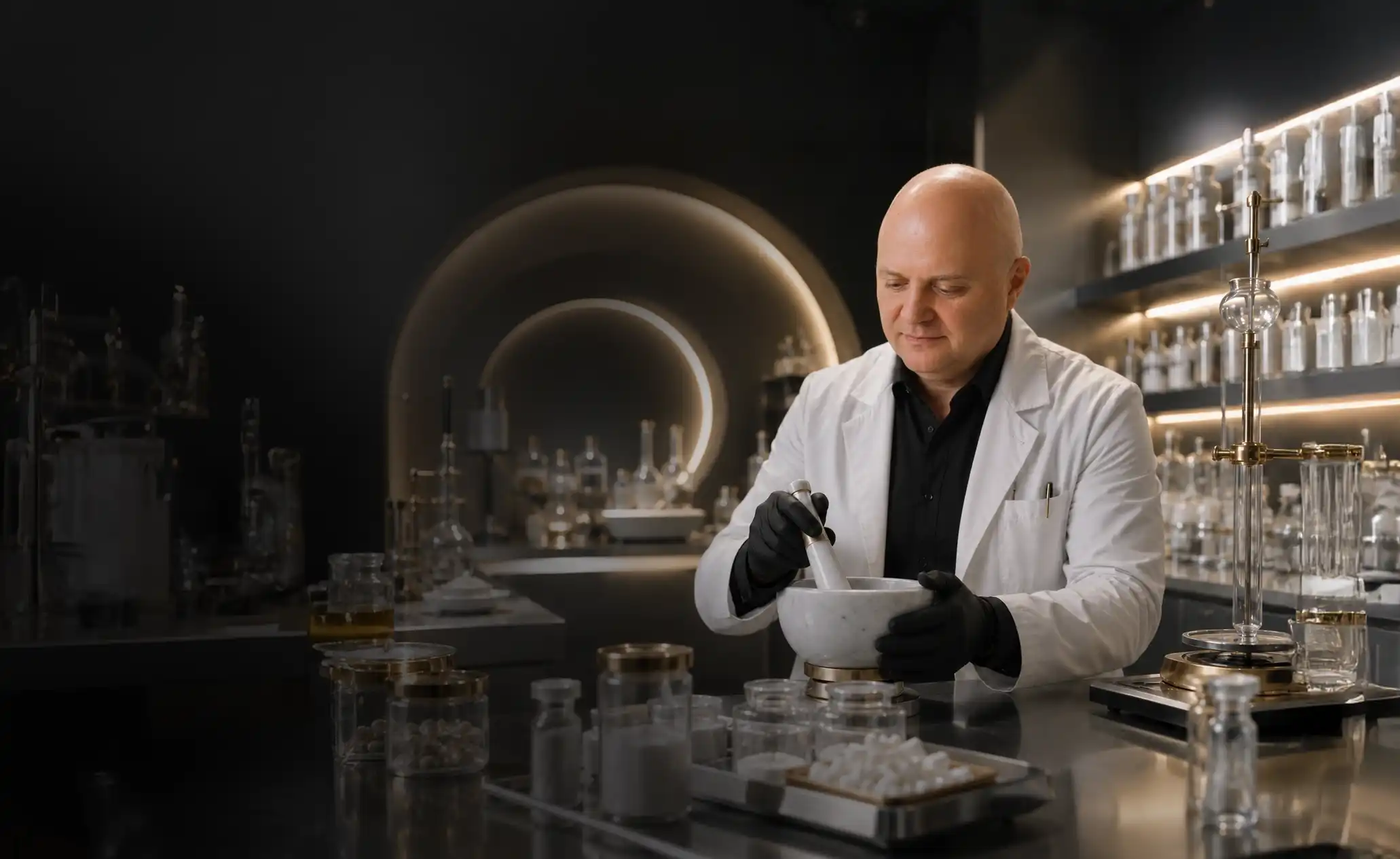
An accessible overview of the fields associated with Dr. Safah’s public work—presented with clear boundaries between education, pharmacy and clinical care.
The content below is general information, not medical advice. Compounded medication, hormone-related care, IV therapy and other clinical services require evaluation by appropriately licensed professionals. No statement on this website should be interpreted as a promise to prevent, treat or cure cancer or any other disease.
Compounding is the preparation of a customized medication by a licensed pharmacy in response to an authorized prescription and an identified patient need.
Examples can include a different strength, dosage form, ingredient combination or excipient profile. The exact scope depends on regulation, facility licensing, professional judgment, quality systems and the prescriber’s instruction.
The treating practitioner identifies a clinical requirement and decides whether compounding is appropriate.
The prescription communicates the required active ingredients, strength, dosage form and directions.
Trained pharmacy personnel prepare the formulation under documented procedures and quality controls.
The patient follows professional instructions and returns to the prescriber for review and adjustment when needed.
These are the principal themes reflected in Revitalife’s public platforms and educational programs.
Public materials describe Dr. Safah as well-versed in BHRT. Any patient program requires medical diagnosis, testing, prescription and follow-up by licensed practitioners.
Revitalife Academy presents practitioner education in biochemistry, pharmacology, administration and professional standards for IV micronutrients.
The clinic describes a patient-centered approach connecting symptoms, lifestyle, diagnostics and personalized wellness planning.
Education and practice require distinct facilities, procedures, environmental controls and competency standards.
These ingredients may be used within professional formulations or care plans when clinically appropriate and legally permitted.
Courses and partnerships aim to connect scientific concepts with practical pharmacy and clinical workflows.
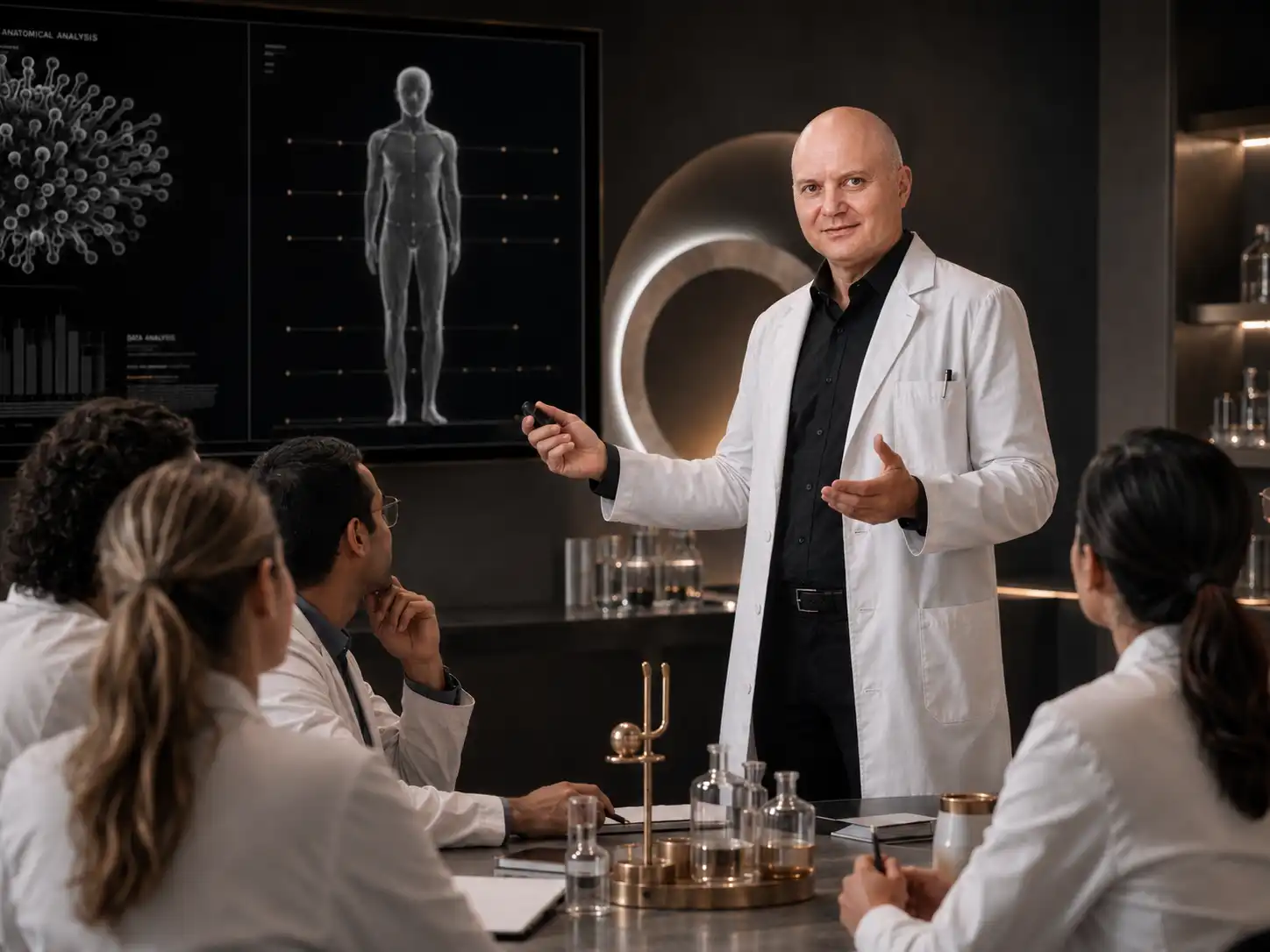
Revitalife Academy’s published curriculum spans integrative medicine, drug discovery and development, anatomy and physiology, legal pharmacy and ethics, patient counselling, and sterile compounding.
The strongest positioning is not that education replaces regulation or clinical qualification. It is that structured learning helps licensed professionals build safer, more informed and more consistent practice.
Explore the academyNo. A compounded preparation is customized by a licensed pharmacy for a specific prescription and need. It is not simply another brand of a standardized commercial product.
The relevant licensed prescriber evaluates the patient and determines the treatment plan. The pharmacy prepares what is lawfully prescribed within its licensed scope.
No. Personalization does not remove the need for evidence, informed consent, professional judgment, contraindication screening or regulatory compliance.
No. This website presents a founder and group profile only. A licensed medical professional must evaluate every individual case.
Dr. Safah’s public profile highlights collaboration with scientists and the operation of research-oriented laboratory capabilities.
The November 2025 Ajman University MoU provides a verified example of this direction, covering hands-on training, workshops, skill development and cooperative research and innovation projects. The profile site presents this as a pathway for responsible capability building—not as evidence that every experimental concept is clinically established.
Read the partnership summarySee Dr. Safah discuss pharmaceutical compounding and review the Ajman University partnership.